


Key Takeaways
-
A decade of energy shocks is accelerating the global shift to electrification. From 21% of final energy today, electricity’s share is on track to exceed 30% by 2035, driven by AI, advanced manufacturing, and EVs.
-
The shift is bigger than energy-share numbers suggest. Electricity is a critical input to the highest-value parts of the global economy, and the sectors it powers already account for 40% of global GDP, a share forecast to reach 50% by 2035.
-
For investors, the implication is that durable companies enabling the buildout of electrification infrastructure across generation, grid, and end-use applications are positioned for sustained demand, regardless of which fossil fuel crisis comes next.
Energy is in Crisis Again
Energy is again in crisis. The Strait of Hormuz, a waterway that carries a fifth of the world’s oil and liquefied natural gas (LNG), is effectively shut. This is a problem for the three-quarters of the world that live in net fossil fuel importing countries1 across Europe and Asia.
Fossil Fuel Import Bills
Fossil fuel net imports (-) and exports (+) value as a share of GDP, 2024
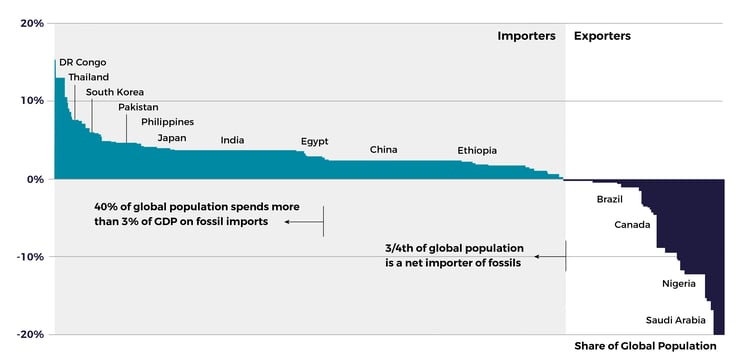 Note: The Y-axis is capped at -/+ 20% for readability.
Even the U.S., a fossil fuel exporter, finds little shelter: oil and gas are set globally. In Texas, one of the world’s largest oil-exporting regions, gasoline prices have spiked since the start of the conflict.
Even in Texas Gas Prices are Rising
Weekly Texas Regular Conventional Retail Gasoline Price ($/gallon)
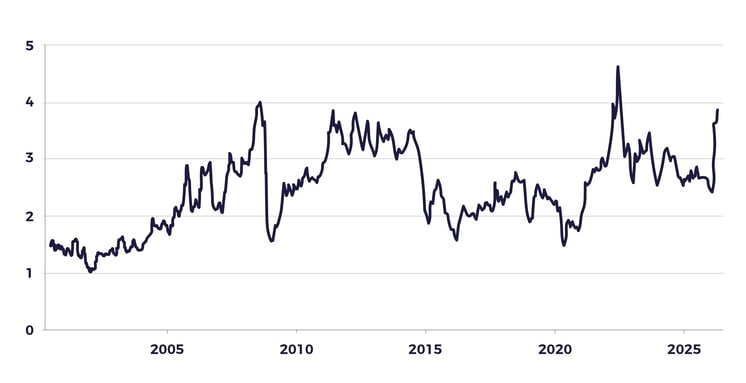 Source: U.S. Energy Information Administration, as of Apr 21, 2026
Electrification is the Solution
As the past several years of energy crises have shown, reliance on fossil fuels for energy is a risky proposition. Electrification is the process of powering things using electricity, especially by replacing fossil fuels in end use applications. Globally, electricity is forecast to keep taking share of energy consumption, and the trend is accelerating from its 21% starting point today. In 2025, the IEA estimates that global electricity demand grew 2.3 times faster than total energy demand.2
This share gain understates electricity’s economic contribution. It is a critical input to high-value-add sectors such as AI, advanced manufacturing, and digital services, which together power 40% of the global economy. This is set to rise to 50% by 2035.3
Electricity is Taking a Greater Share of Energy Consumption and Powers Even More Economic Output
Electricity as a share of energy consumption and electricity consuming sectors as part of economic output, 2010-2035 (STEPS Scenario)
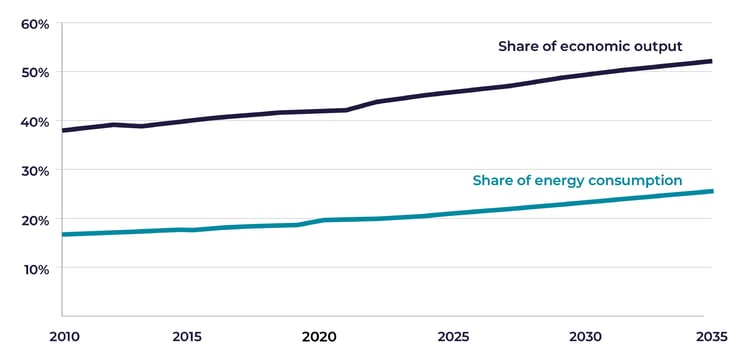 Source: IEA, as of Nov 2025
Electricity use is growing everywhere, and major energy shocks can reset priorities and push trends for decades.
-
Electric vehicles account for 25% of all cars sold globally in 2025.4 Since the start of the Iran conflict, reports describe overflowing showrooms and a further acceleration of demand.5
-
Clean energy prices continue to fall across technologies leading to long-term adoption.
The Cost of Deploying Renewable Electricity Keeps Falling
Indices of clean energy equipment prices and upstream oil and gas capital costs, and global average capital cost of selected energy technologies, 2015-2024
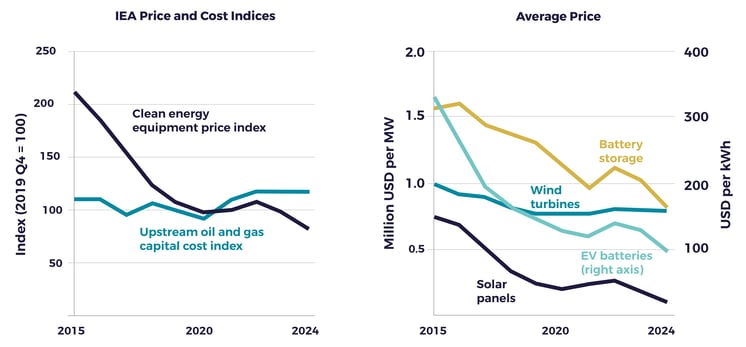 Source: IEA, as of Nov 2025
The Bottom Line
Energy shocks carry long-term implications, and one of the clearest is pushing the global transition to electricity. For investors looking to gain exposure to this trend, the Tema Electrification ETF (VOLT) invests in companies positioned to benefit from the acceleration of electricity’s share in final energy consumption.
For more of our research and insights on electrification and more, view and subscribe to our insights.